
Your orders are shipped seamlessly between countries
You have the right to return your orders within 30 days.
Your payments are secure with our private security network.
Description
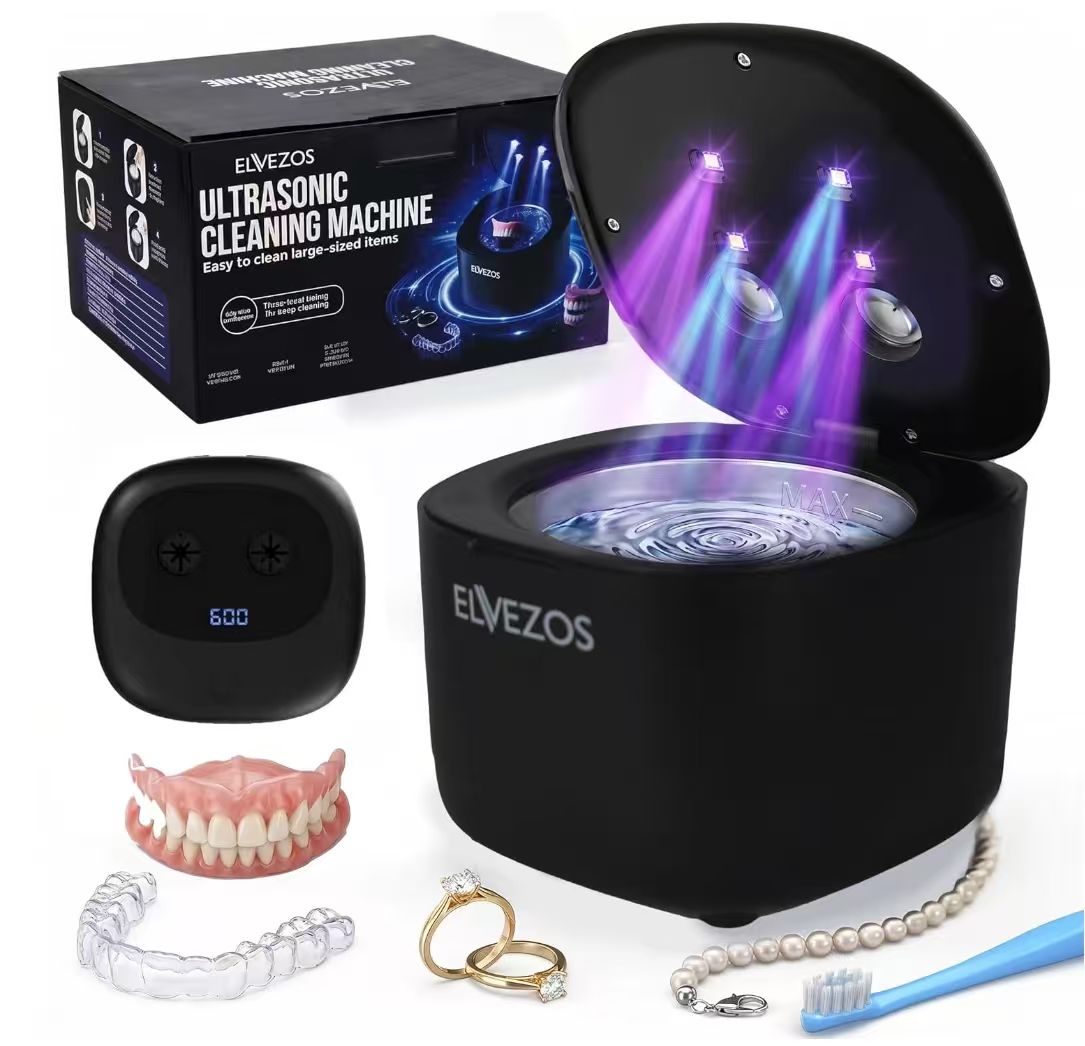
Best Budget Ultrasonic Retainer Cleaner in 2025 – Dental Hygiene Cleaning Device Review
Introduction
Maintaining oral hygiene is not only about brushing and flossing—many people also use retainers, dentures, mouthguards, or aligners that require regular cleaning. Over time, these dental appliances can collect bacteria, plaque, stains, and odors that are difficult to remove with manual brushing alone.
An ultrasonic retainer cleaner offers a modern and effective solution by using high-frequency sound waves to create microscopic bubbles in water. These bubbles gently clean hard-to-reach areas, removing debris without damaging delicate dental appliances. This makes it far more efficient than traditional soaking or scrubbing methods.
In 2025, ultrasonic cleaning devices have become increasingly popular due to their convenience, hygiene benefits, and time-saving performance. Budget-friendly models now make it possible for everyday users to maintain professional-level cleaning at home.
Pros & Cons
Pros
– Deep cleaning using ultrasonic vibration technology.
– Removes plaque, stains, and bacteria effectively.
– Safe for retainers, aligners, dentures, and mouthguards.
– Easy one-button operation for daily use.
– Reduces bad odor from dental appliances.
– Saves time compared to manual brushing.
– Compact and portable design for home or travel use.
– Affordable alternative to professional dental cleaning services.
Cons
– Requires regular water changes for best results.
– Cleaning effectiveness may vary depending on dirt level.
– Small capacity limits larger dental appliances.
– Needs electricity or USB power source for operation.
Comparison with Similar Products
Ultrasonic Cleaner vs Manual Brushing
Manual brushing can clean surface dirt but often misses hidden areas. Ultrasonic cleaning reaches microscopic gaps and provides deeper hygiene.
Ultrasonic Cleaner vs Soaking Tablets
Cleaning tablets help disinfect but take longer and may not remove all debris. Ultrasonic devices provide faster and more thorough cleaning.
Ultrasonic Cleaner vs Professional Dental Cleaning
Professional cleaning offers the highest level of hygiene but is costly and periodic. Ultrasonic cleaners provide daily maintenance at home between dental visits.
8 User Tips & Usage Guide
1. Use Clean Water Each Time
Always fill the device with fresh water before each cleaning session.
2. Add Cleaning Solution if Recommended
Some models allow mild cleaning agents for better results.
3. Do Not Overload the Chamber
Clean one or two items at a time for best ultrasonic performance.
4. Follow Recommended Cleaning Time
Avoid excessive cycles that may not improve results further.
5. Rinse After Cleaning
Rinse dental items with clean water after the cycle finishes.
6. Clean the Device Regularly
Wipe and maintain the tank to prevent residue buildup.
7. Use Daily for Best Hygiene
Regular cleaning prevents plaque and odor buildup.
8. Store in a Dry Place
Keep the cleaner in a safe, dry location when not in use.
Conclusion
An ultrasonic retainer cleaner is one of the best budget dental hygiene devices in 2025 for anyone who uses retainers, aligners, dentures, or mouthguards. It provides a fast, safe, and effective way to maintain oral hygiene at home without expensive dental visits.
This product is ideal for orthodontic patients, denture users, and individuals who value daily oral cleanliness. If you want an easy and efficient way to keep dental appliances fresh and bacteria-free, an ultrasonic cleaner is a smart and practical investment.
Reviews
There are no reviews yet.