
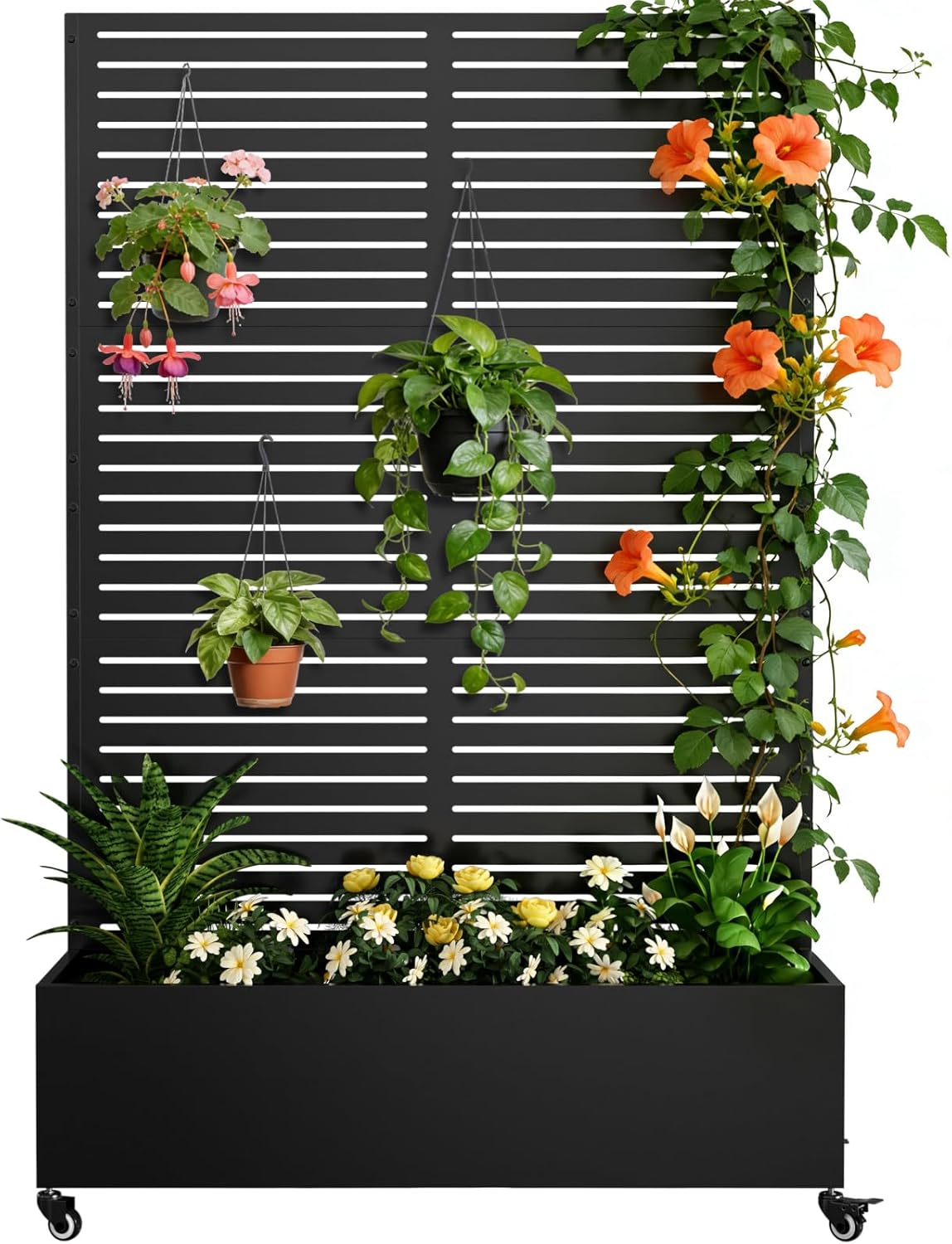
Metal Raised Garden Planter Bed
Your orders are shipped seamlessly between countries
You have the right to return your orders within 30 days.
Your payments are secure with our private security network.
Description
Best Budget Garden Trellis for Climbing Vegetables (2025 Review)
Introduction
Growing vegetables at home is rewarding, but it often comes with a common problem—limited space and messy, sprawling plants. Crops like cucumbers, beans, and tomatoes tend to spread across the ground, making gardens look crowded and increasing the risk of pests, rot, and disease.
A garden trellis solves these issues by allowing plants to grow vertically instead of horizontally. This not only saves space but also improves airflow and keeps fruits off the soil, which leads to healthier plants and easier harvesting. Research shows that vertical gardening with trellises can reduce disease risk and improve productivity by increasing sunlight exposure and airflow (thegardenstyle.com).
Budget-friendly options like the Baotree climbing trellis are designed for everyday gardeners who want a simple, affordable way to support their plants without building complex structures.
Pros & Cons
✅ Pros
- Saves space by encouraging vertical growth
- Keeps vegetables clean and off the ground
- Improves air circulation and reduces pest issues
- Suitable for multiple crops like beans, cucumbers, and peas
- Lightweight and easy to install
- Foldable or compact design for storage
❌ Cons
- May not support very heavy vegetables (like large melons)
- Lightweight build may need extra anchoring
- Durability depends on material quality
- Limited height compared to custom-built trellises
- May require adjustments as plants grow
Comparison with Similar Products
Vs. Wooden Trellises:
Wooden trellises are strong and long-lasting but require tools and effort to assemble. Budget options like this one are easier to set up and more beginner-friendly, though slightly less durable.
Vs. Metal Trellis Panels:
Metal panels are extremely sturdy and can handle heavy crops, but they are heavier and more expensive. Budget trellises offer a lighter, more portable alternative suitable for small gardens.
Vs. DIY String or Bamboo Trellises:
DIY options are cheap and customizable, but they take time and skill to build. Pre-made trellises are more convenient and consistent in design, making them ideal for quick setups.
Overall, budget trellises strike a balance between affordability, ease of use, and decent performance, especially for lightweight to medium crops.
8 User Tips / Usage Guide
- Install early in the growing stage
Setting up the trellis before plants mature prevents root damage later. - Anchor it properly
Push legs deep into the soil or secure with stakes to prevent tipping. - Match the trellis to your plant type
Lightweight climbers like peas need less support, while tomatoes require stronger structures (ForeverYard) - Train plants gently
Guide vines onto the trellis regularly to encourage upward growth. - Use ties if needed
Some plants, like tomatoes, may need manual support to climb properly. - Avoid overloading
Heavy fruits can strain weaker frames—monitor weight distribution. - Position for sunlight
Ensure both sides receive enough light for balanced growth. - Check stability after weather changes
Rain or wind can loosen the structure, so adjust when needed.
Conclusion (Who Should Buy It)
This budget garden trellis is an excellent choice for home gardeners, beginners, and anyone working with limited space. It’s especially useful for growing climbing vegetables like cucumbers, beans, and peas in small gardens, raised beds, or even containers.
While it may not replace heavy-duty structures for large-scale gardening, it provides great value for everyday use. If you want a simple, affordable, and effective way to improve plant health and maximize space in 2025, this trellis is a smart and practical investment.
Reviews
There are no reviews yet.