
Your orders are shipped seamlessly between countries
You have the right to return your orders within 30 days.
Your payments are secure with our private security network.
Description
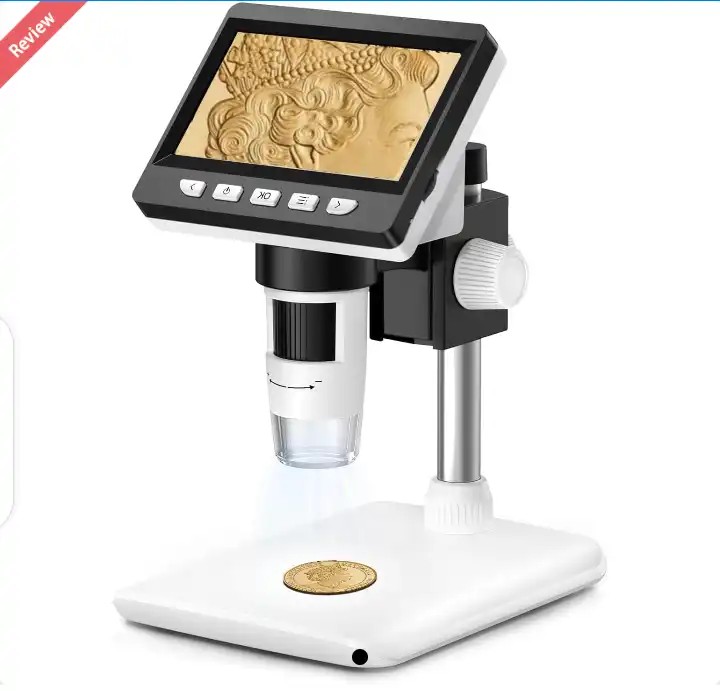
Best Budget Digital Microscope in 2025 – Smart Learning & Inspection Tool Review
Introduction
Exploring tiny details that are invisible to the naked eye has always fascinated students, hobbyists, technicians, and science enthusiasts. Whether it’s examining plant cells, inspecting electronics, studying insects, or analyzing materials, a microscope opens up a completely new world of discovery.
A digital microscope takes this experience further by connecting to a screen—such as a laptop, smartphone, or built-in display—allowing users to view magnified images in real time. Unlike traditional optical microscopes that require looking through an eyepiece, digital versions make learning more interactive, shareable, and easier for beginners.
In 2025, budget digital microscopes have become widely accessible, making science education, repair work, and hobby exploration more engaging for all age groups. These devices are especially popular among students, educators, electronics repair technicians, and nature enthusiasts.
Pros & Cons
Pros
– Provides real-time magnified viewing on screen.
– Easy to use for beginners and students.
– Suitable for education, repair work, and hobby use.
– Portable and compact design in most models.
– Helps inspect electronics, coins, plants, and insects.
– Often includes photo and video capture features.
– Affordable compared to professional lab microscopes.
– Enhances interactive learning and demonstrations.
Cons
– Image quality may vary depending on device resolution.
– Limited zoom compared to high-end laboratory microscopes.
– Requires stable lighting for clear viewing.
– Some models need software installation or setup.
Comparison with Similar Products
Digital Microscope vs Optical Microscope
Optical microscopes provide traditional high-detail viewing through lenses, while digital microscopes display images on screens, making them easier for group learning and sharing.
Digital Microscope vs Magnifying Glass
Magnifying glasses offer basic enlargement but lack precision and detail. Digital microscopes provide much higher magnification and clearer imaging.
Digital Microscope vs Professional Lab Microscope
Professional microscopes deliver superior scientific accuracy but are expensive and complex. Budget digital microscopes are ideal for learning, hobbies, and light professional tasks.
8 User Tips & Usage Guide
1. Use Stable Lighting
Good lighting improves image clarity and reduces blur.
2. Keep the Surface Steady
Place the microscope on a stable surface to avoid shaking during viewing.
3. Adjust Focus Slowly
Make small adjustments to achieve the sharpest image.
4. Clean the Lens Regularly
Dust or fingerprints can reduce image quality.
5. Start with Low Magnification
Begin with lower zoom levels before increasing magnification.
6. Use Compatible Devices
Ensure your phone or computer supports the microscope connection method.
7. Capture Images for Study
Take photos or videos to review findings later.
8. Avoid Overheating
Do not use the device continuously for long periods without breaks.
Conclusion
A digital microscope is one of the best budget educational and inspection tools in 2025 for students, hobbyists, and professionals who want to explore microscopic details easily. Its ability to display magnified images on screens makes learning more interactive and accessible compared to traditional microscopes.
This device is ideal for science students, electronics repair technicians, collectors, and nature enthusiasts. If you are looking for an affordable way to explore the microscopic world with modern convenience, a digital microscope is a smart and valuable investment.



Reviews
There are no reviews yet.